Log in



Create Internship Agreement
 Contract Review
  Other templates
 At-Will Employment Agreement





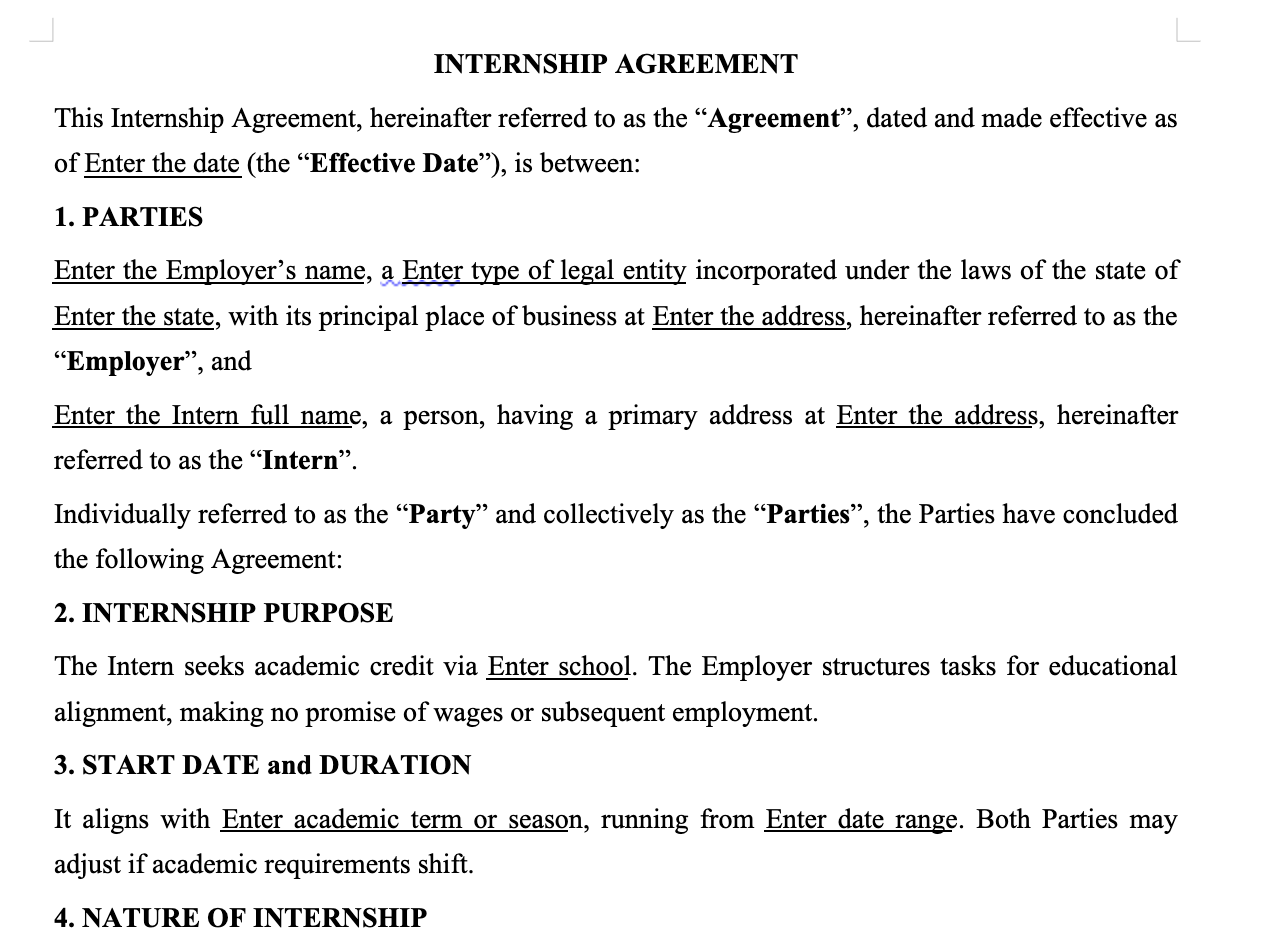
INTERNSHIP AGREEMENT
This Internship Agreement, hereinafter referred to as the “Agreement”, dated and made effective as of (the “Effective Date”), is between:

An internship typically involves an Employer (business, nonprofit, or government entity) and an Intern (student or trainee). Precisely naming them clarifies responsibilities. If a third party (e.g., a university) is involved, reference it as well. The Intern is not a regular employee unless specified otherwise.

Enter the Intern full namename_4, a person, having a primary address at Enter the addressaddress_4, hereinafter referred to as the “Intern”.
Individually referred to as the “Party” and collectively as the “Parties”, the Parties have concluded the following Agreement:
Internships revolve around education or experience for the Intern. Clarifying the learning objectives (academic credit, skill building, or career exploration) can demonstrate compliance with laws about unpaid internships. Emphasizing an educational, not purely operational, focus helps justify non-employee status.
Internships typically have a set period—summer session, semester, or a certain total hours. This question sets the start date and expected completion or total hours. If it ends earlier or is extended, disclaim. A definite timeframe supports the structured, non-employee nature.
U.S. law allows unpaid internships if the arrangement primarily benefits the Intern (FLSA tests). If it’s paid, disclaim the wage details. This question cements the financial or non-financial arrangement. Not addressing it creates legal risk if the internship’s classification is challenged.
Interns often have part-time or flexible hours. This question sets approximate times or days. If referencing a separate schedule, disclaim the Employer’s right to adjust hours for educational or operational reasons. The Intern acknowledges no standard wage job is guaranteed unless specified above.
A hallmark of a valid internship is ongoing supervision. This question names the assigned mentor/supervisor, clarifying frequency of check-ins or feedback. Demonstrating structured mentorship helps show compliance with educational requirements for an unpaid or partially paid internship.
Internships often include structured lessons or project work to demonstrate an educational primary benefit. This question clarifies if the Employer provides modules or if the Intern must produce final reports or presentations. Clear educational structure supports compliance for an unpaid internship.
Interns may access proprietary or client data. This question clarifies if a confidentiality clause or separate NDA is required. This helps protect the Employer from unauthorized disclosures. If referencing a separate NDA, disclaim minimal coverage here. Vital for business security.
If the Intern develops code, designs, or inventions, the Employer often claims ownership if it’s within the internship scope. This question clarifies if the intern’s output is “work made for hire” or partially assigned. If no IP creation is expected, disclaim minimal coverage.
Interns might undertake tasks on-site or remote. This question clarifies if the Employer disclaims certain liabilities or if standard coverage (workers’ comp for paid interns) applies. If referencing personal insurance or disclaimers for property damage, disclaim minimal coverage. The Intern acknowledges inherent training risks.
Internships rarely ensure permanent jobs. This question clarifies that no later job is guaranteed. If referencing possible hiring pathways, disclaim that it’s purely discretionary. The intern acknowledges no indefinite work or wage claim arises. Helps avoid misunderstanding about job offers.
Internships often feature feedback or evaluations mid-way and at completion. This question clarifies if the Employer uses informal or formal reviews, including forms for academic credit. If referencing a standard performance form, disclaim minimal coverage. The intern has no guaranteed passing grade or positive rating.
Internships can be fully on-site, remote, or hybrid. This question clarifies location. If referencing remote tasks, disclaim device or data policies. If on-site, disclaim compliance with workplace safety or visitor protocols. The intern acknowledges no guaranteed workspace beyond the internship term.
Interns can impact brand image or client perception. This question clarifies if the Employer requires them to avoid disparaging statements or social media negativity. Some organizations only require general professional behavior, but disclaim they can end the internship if guidelines are violated.
Many interns want a recommendation letter or certificate. This question clarifies if it’s automatic or conditional on performance. If referencing academic forms, disclaim the Employer’s role in final grading. No guarantee of a positive letter if the intern fails tasks or breaches rules.
While interns are learning, accidents or misconduct can happen. This question clarifies if the Employer holds them personally responsible for major negligence or willful harm. If referencing normal discipline or disclaiming big liability for minor learning mistakes, disclaim minimal coverage.
The Employer might be lenient with small slip-ups, focusing on education. This question clarifies that one-time tolerance doesn’t remove the Employer’s right to enforce rules or end the internship for further breaches. If disclaiming, disclaim minimal coverage. Helps the Employer avoid claims of consistent leniency waiving future action.
Internships may end early if goals aren’t met or if misconduct occurs. This question clarifies whether either side can terminate unilaterally, the notice period, or if academic issues can trigger an end. If referencing abrupt termination, disclaim that no wages or severance is due for an unpaid role.
If the Employer is in a regulated field (health, finance, law), the intern may need special clearances or follow strict confidentiality laws like HIPAA or FINRA. This question clarifies that compliance. If none apply, disclaim. The intern acknowledges potential background checks or license needs.
Internship disputes might involve wage classification or academic credit. This question clarifies if the Parties must arbitrate or can litigate. If referencing a college grievance system, disclaim. The Employer’s disclaimers do not preclude statutory claims if the intern is misclassified or discriminated against.
The agreement typically finalizes once both sign, either physically or electronically. Some do two originals. If referencing an earlier acceptance, disclaim that the intern acknowledges disclaimers retroactively. This question cements how the arrangement is validated and from which date.


Page content

1. Introduction — The Purpose of an Internship Agreement
Internships are short-term opportunities where students or recent graduates gain work experience in a real-world setting. By deciding to create Internship Agreement clauses, organizations and interns protect each other from confusion about responsibilities, supervision, or payment (if any). A formal arrangement also clarifies whether the intern is truly learning and not just performing unpaid labor.
While some smaller companies might rely on verbal deals, a well-drafted contract removes doubts about safety protocols, confidentiality, and termination. If you choose to generate Internship Agreement text, start with basic details about the position, duration, and duties. You can also adapt a blank Internship Agreement from a legal resource, then refine it to match your industry norms.
2. When Is an Internship Agreement Necessary?
Any time a business or nonprofit brings on an intern—especially if that intern is seeking academic credit or structured experience—a contract helps. In some places, educational institutions demand a valid Internship Agreement example before approving the intern’s placement. Some agreements align with official standards on training, working hours, or insurance coverage.
Even for small or informal internships, a contract clarifies the arrangement. If you create Internship Agreement language for a short marketing internship, you might define the scope: social media tasks, meeting attendance, feedback sessions. If the intern is from a local university, they might rely on an online Internship Agreement to confirm the role meets academic requirements.
3. Identifying the Parties and Basic Info
At the start, name both the organization (the host) and the intern. Include addresses or contact details for each side, ensuring there’s no confusion about official designations. If a school or third party is also involved, mention them. For instance, if the internship is part of a cooperative education program, the contract might reference the academic sponsor.
A form Internship Agreement often leaves placeholders for these details. For more clarity, you might list the intern’s academic major, year, or any credits they aim to earn. This helps confirm how the internship meets the school’s or program’s guidelines, if relevant.
4. Scope of Internship and Learning Objectives
One central element in Internship Agreement is the scope of tasks and the educational objectives. While a standard job contract focuses on job duties, an internship aims to provide growth or training for the intern. Outline the main projects or responsibilities the intern handles.
You can create Internship Agreement clauses referencing specific skills or experiences the intern hopes to gain—like learning project management tools, customer service techniques, or basic coding tasks. If you rely on a blank Internship Agreement, adapt the tasks carefully. This ensures the intern does not just do menial tasks, aligning the internship with educational or professional development standards.
5. Duration and Work Hours
An Internship Agreement typically states how long the internship runs. Some might last a semester or a summer, while others continue for 6-12 months. Defining start and end dates sets expectations about how soon the intern completes their involvement.
Also clarify weekly hours. Perhaps the intern works 10-20 hours a week if juggling studies, or full-time if on a break. By deciding to generate Internship Agreement text that addresses hours, you reduce the risk of labor law issues. If the intern’s schedule or availability shifts, a short addendum might be signed to update the hours.
6. Payment or Unpaid Status
In many places, interns can be unpaid if certain conditions are met, like receiving academic credit or if the intern primarily benefits from the learning. However, labor laws vary. Some roles require at least minimum wage. The contract must specify:
- Whether the intern is paid or unpaid.
- If paid, how and when wages are delivered (weekly, monthly, or a stipend).
- If unpaid, mention the educational or training rationale for compliance with local wage laws.
A simple Internship Agreement might note “This is an unpaid internship for academic credit,” referencing compliance with legal standards. But if you pay a stipend or hourly wage, mention the amount, ensuring the intern knows exactly how compensation works.
7. Duties, Mentorship, and Supervision
Unlike normal staff, interns require more oversight and training. A well-structured Internship Agreement can define:
- Supervisor: Who mentors or monitors the intern’s progress? Possibly naming a staff member or department manager.
- Learning Activities: The intern might shadow staff, attend workshops, or handle small tasks with direct guidance.
- Feedback or Evaluations: Some deals specify periodic reviews to track the intern’s growth or performance.
By clarifying that the intern is not expected to handle critical or complex tasks alone, you align with the concept of a learning-based position. If you generate Internship Agreement clauses for a professional environment, mention a short schedule of mentorship sessions or check-ins, so the intern reaps real educational benefit.
8. Confidentiality and Use of Company Materials
Even interns may handle proprietary info or get glimpses of private data. The Internship Agreement can require:
- Non-Disclosure: The intern won’t disclose company secrets, client data, or strategic plans.
- Proper Handling of Materials: If the intern receives badges, laptop equipment, or software access, clarify the usage guidelines.
- No Misuse: Prohibit the intern from copying or distributing intangible assets or from creating personal backups of company documents without permission.
Often, the host company integrates a short NDA. If you rely on an existing policy or a separate doc, referencing that in the main internship form is wise. If you prefer a single integrated approach, incorporate a confidentiality clause directly into the Internship Agreement.
9. Intellectual Property Ownership
In some specialized settings, interns create code, designs, or marketing concepts. The agreement might specify that any work product belongs to the company. Alternatively, the intern might keep rights to personal creations not directly related to the internship tasks.
If you plan to create Internship Agreement text for a tech or creative environment, be explicit about IP. Many organizations treat interns like employees in that all works made during the internship belong to the employer. However, confirm local law or academic rules about student projects. A standard approach is a simple assignment clause, ensuring the company retains ownership if the intern’s tasks produce IP.
10. Independent Status vs. Employment Classification
An internship is often a unique category. It can be akin to an employee if wages, hours, and instructions mimic standard jobs. Or it might be more akin to a training arrangement. The contract can disclaim that the intern is not a permanent staff member, explaining how it differs from normal employment.
If the internship is unpaid, ensure you meet local legal guidelines on permissible unpaid roles. Some regions have strict rules: the internship must be educational in nature, not displace regular workers, and primarily benefit the intern. By clarifying this in the contract, you help show compliance with wage/hour regulations.
11. Liability, Health, and Safety
If the intern works on-site, mention who handles safety training or protective equipment. Some contracts disclaim the company’s liability for accidents if the intern disregards protocols. Others require the intern to hold personal insurance or rely on the school’s coverage.
If the internship is remote, the contract might disclaim that the intern is responsible for a safe home workstation. Also note if the intern must comply with any data security rules. If the role is physically demanding, highlight all safety rules. A standard approach may mention local OSHA compliance or general safety policies, ensuring the intern knows to follow them.
12. Termination, Completion, and Certificates
Internship Agreement typically states how either side can end the arrangement. For instance, if the intern breaks company rules or repeatedly no-shows, the company might terminate. The intern, too, might resign if they find the tasks not aligned with their learning goals.
It can also mention the possibility of early termination by mutual consent, especially if the intern secures a job elsewhere or if the project ends early. If the internship is for academic credit, mention that completion might require a final evaluation or submission. The host might issue a certificate or letter verifying that the intern successfully completed the term.
13. Dispute Resolution and Governing Law
While internships rarely lead to serious legal disputes, it’s still wise to define:
- Choice of Law: Typically the state or region where the internship occurs.
- Venue: Possibly local courts or an arbitration approach if disagreements arise.
- School Involvement: If the internship is tied to a college, the contract might mention that any academic dispute or credit issues go through the school’s procedures.
A short paragraph often suffices. If the host organization typically handles bigger staff with formal HR policies, referencing them can provide an additional framework. But for a small internship, a single line about local state law controlling might do.
14. Format, Signatures, and Adaptation
After you generate Internship Agreement text or refine a blank Internship Agreement from a standard template, finalize it. Keep these pointers:
- Clear Headings: For each clause, like “Scope,” “Duration,” “Compensation,” ensuring easy reading.
- Signatures: The intern signs, as does an authorized representative of the host organization. If the intern is under 18, consider a parent or guardian signature.
- Dates: The effective date might be the first day or the contract signing date.
- Final Storage: Each side keeps a copy. Some prefer a “printable Internship Agreement form pdf” format for archiving.
If the arrangement changes mid-way—like extended tasks or a different schedule—both parties can sign a short addendum. The best practice is preserving a consistent paper or digital trail, proving the evolving agreement.
15. Crafting a Secure and Educational Internship Arrangement
Internship Agreement cements the structure that ensures the intern receives meaningful learning while the host entity secures a beneficial helper under clear guidelines. By covering scope, length, compensation, confidentiality, and how to handle early termination, you align with best practices and, often, labor laws. Whether you rely on an online Internship Agreement generator to produce a simple version or adopt a robust approach from an example Internship Agreement, each section should match your real scenario.
Signing the final text brings transparency for both the intern and the organization. With a well-defined arrangement, the internship can yield a valuable, lawful, and organized experience, forging positive results for all involved.














 Select a plan